A Response to American Data in the Hands of the Taliban
In light of recent attacks from the insurgent Taliban and other armed groups, the total collapse of the Afghan government has had much of the world watching in horror as decades’ long political turmoil has escalated into yet another period of unrest. With the United States’ occupation of Afghanistan since 9/11, this disturbing news is particularly poignant for U.S. citizens who have not only served overseas but developed and promoted intelligence technologies that have largely contributed to the nation’s most prominent military successes since the turn of the century. Many of these technologies have been enabled or protected by biometric authentication, a technology that has served as a backbone for many identification programs implemented around the world. Biometrics are the measurement of physiological or behavioral characteristics of a person, such as fingerprint, iris patterns, or facial features that can be used to identify an individual. Traditionally, biometric information has been stored in central honeypots, which is now raising alarms from a national security perspective.
With the news of American biometric devices being stolen by Taliban forces, many anticipate the worst: the potential exposure of sensitive information to a subversive regime that commits human rights violations against the Afghan people. Considering the severe consequences of such an information leak, the priority now is to protect the people whose identities are accessible via these biometric devices.
Recent massive data breaches – like that of the communications company T-Mobile – have compromised the private information of tens of millions of individuals. This unprecedented attack allows cybercriminals unauthorized access to customers’ full names, phone numbers, and addresses, as well as Social Security Numbers (SSN), device IDs, and account passwords (PINs).
The national security breach in Afghanistan is of potentially greater risk for national security than a corporate data breach. However, at its core, the fundamental problem remains the same for both crises. For decades, individuals, corporations, and the American government have built identity systems around centralized storage of sensitive, personal data in central databases, creating the potential for large-scale security risks for those whose information is kept within them. In early 2015, the Office of Personnel Management discovered that the personal data of 4.2 million current and former Federal government employees had been stolen, including full names, birth dates, home addresses, and Social Security Numbers (SSN). More recently, the California Department of Motor Vehicles has uncovered a massive security breach that has potentially leaked 20 months' worth of state vehicle registration records – an incident that has effectively put millions of California drivers at risk.
Even in the past few weeks, besides T-Mobile, AT&T and the U.S. State Department have also suffered attacks that have left millions of customers and American citizens vulnerable to the exploitation of cyber criminals. While the extent of the risk to the State Department’s internal operations still remains unknown, in the recent AT&T breach an attacker claims to have obtained the personal data for 70 million accounts. While equipped with security infrastructure that consolidates large amounts of valuable data in a single place, organizations are always facing the growing threat of cybercriminals who are able to surpass even some of the most sophisticated cybersecurity measures. Through malware, ransomware, sophisticated engineering, device takeovers, phishing scams and the like, attackers have amassed a tremendous arsenal to fuel a lucrative underground business.
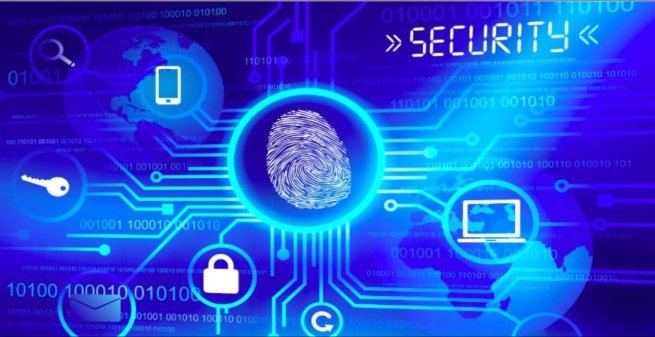
This goes back to the urgent question coming out of Afghanistan: how can we protect our data? First, we need an infrastructure very different from any conventional model: a decentralized, privacy-preserving framework that gives attackers nothing to find and nothing to steal. Using multi-party computing, parts of personal data can be disbursed over an entire network, rendering each individual piece meaningless on its own. With the help of innovative technologies, pieces of sensitive data can exist in data stores independently without the possibility of being connected together or putting any one person at risk. Second, we need strong authentication methods – provided by biometrics – that have the power to fortify security measures for sensitive information. As opposed to weak proxies for identity like passwords, smart cards, locations, or the use of specific devices, data access that relies on biometric measures are inherently linked to the physical identity of a person. Biometric technologies have already become part of our daily lives in so many ways, think Apple Face ID or TouchID, but have yet to permeate our enterprises and government agencies in a meaningful way, creating serious loopholes that hackers are all too ready to exploit. The fact is, that any system that solely employs knowledge-based authentication, such as passwords, as the ultimate fallback will inherently be vulnerable to devastating breaches. By comparison to biometrics, knowledge-based authentication is inherently weak and will ultimately fail to safeguard sensitive data.
While some advocate for not collecting data at all, new methods of data management and security have the capacity to ensure data protection for all Americans and our allies. With the understanding that our current methods of data protection and identity authentication are outdated, we need to leverage innovative technologies to foster the well-being of our nation. In tandem with radical policy changes, the implementation of security techniques and vastly improved cyber hygiene is what America needs to forge a new digital identity and protect our national security. Given the events of the last week, there is a real risk that terrorism rises again. But unlike the aftermath of 9/11, the next war will not only be fought on the ground, it will also be fought on the internet. We need to be better prepared.
More on this in The Identity Imperative
The Identity Imperative takes these ideas further, with case studies from organizations getting identity right and the ones that did not. About the book